Table of Contents:
Introduction
Cajanus cajan
Ambarivatry in Madagascar
Lablab purpureus
Voanemba in Madagascar
Vigna cf. unguiculata
Voanemba in Madagascar
References:
Introduction
We have provisionally identified three species legumes at Ambohidahy from an early 15th century context. This is the first time that Cajanaus cajan and Lablab purpureus have been documented archaeologically in Madagascar. This possible Vigna unguiculata specimen is also the earliest documented example in Madagascar.
Photographs of three relatively complete legumes recovered from Trench 3, Context 25 (Float sample 47). Tables below each set of photos show comparative data from Fuller and Harvey 2006 based on measurements of archaeologically recovered legumes from India. Length, breadth and width were measured, along with the hilum where it was preserved or could be identified.
We used Fuller & Harvey’s reference measurements only for species known to be present in Madagascar. We made a determination of probable identity based both on these measurements and on morphological comparison with modern specimens.
Below we provide images, measurements and contextual information for the following three examples:
Cajanus cajan


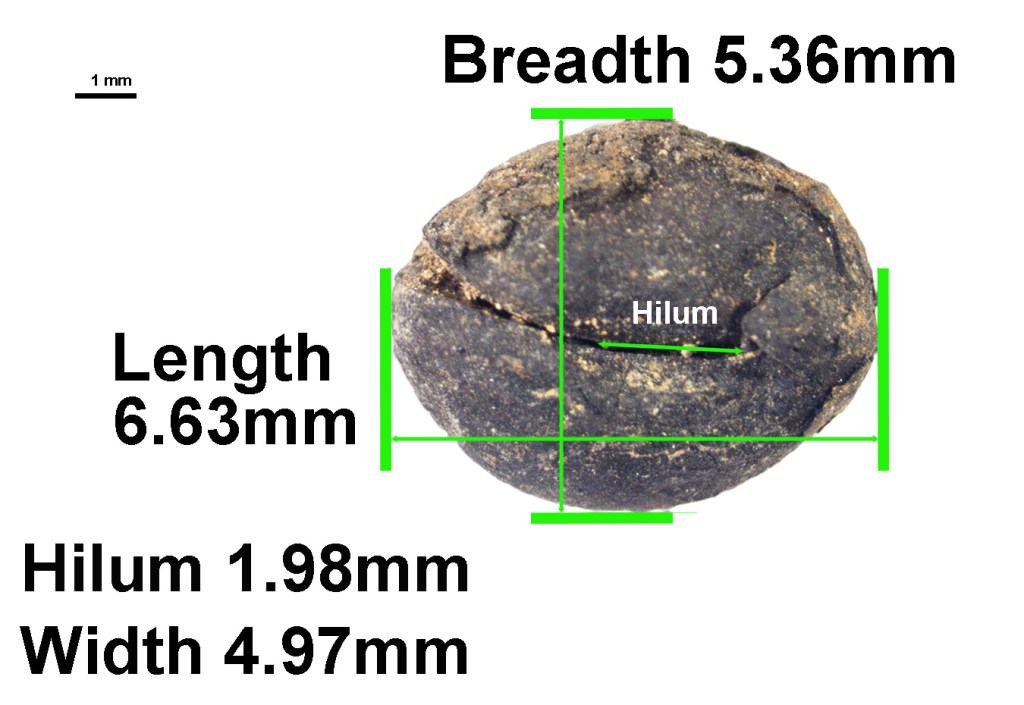
Archaeologically recovered from Ambohidahy
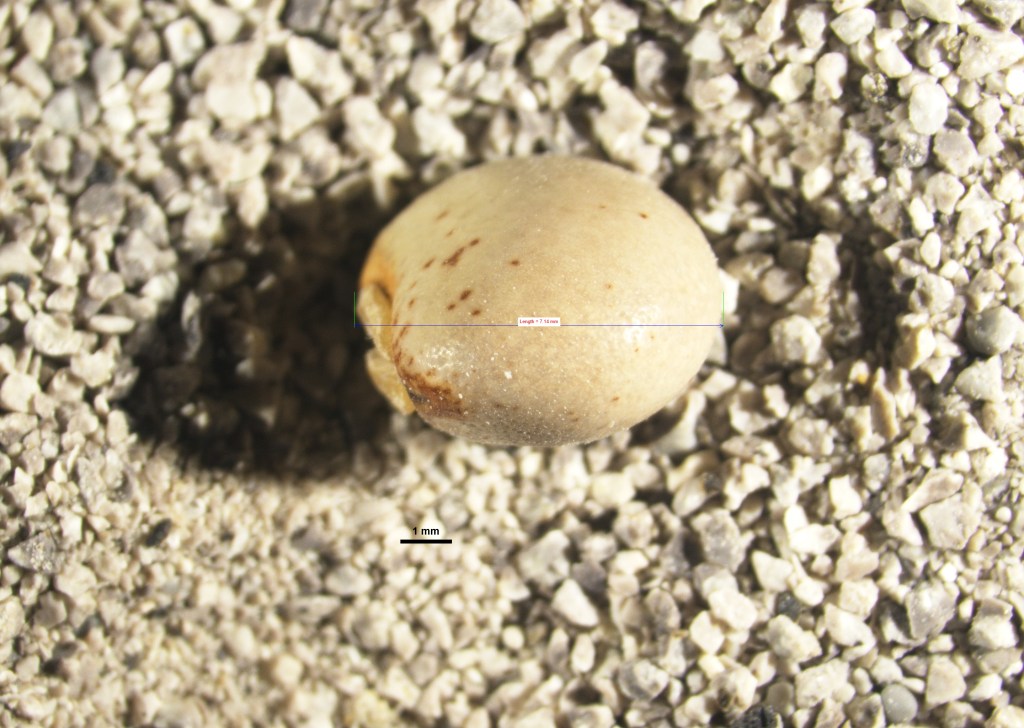
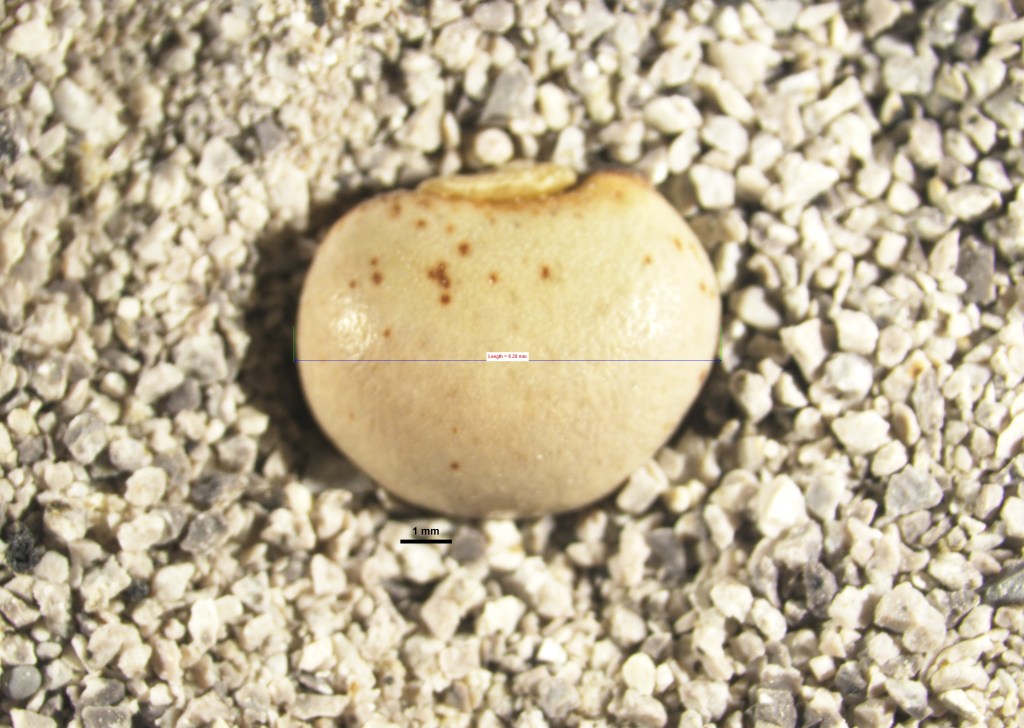

Modern reference sample
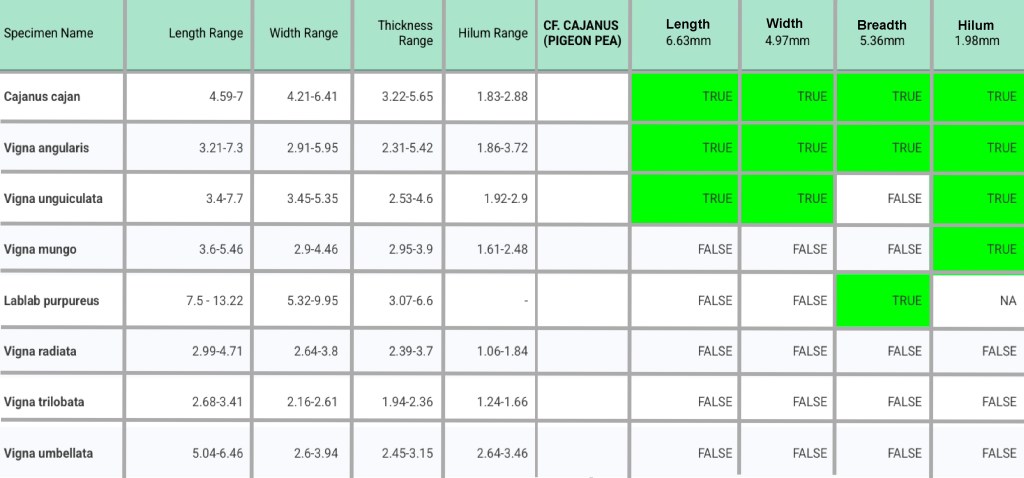
Comparison table for our specimen with measurements for a range of carbonized legumes excavated in India, from Fuller and Harvey 2006
Ambarivatry in Madagascar
Likely first cultivated in India and widely used throughout SE Asia as a legume, today Cajanus Cajan, or Pigeon Pea is a known cultivar around Madagascar with the exception of the dryer areas of the South and South West. Both cultivated and used as a semi-wild crop, Pigeon Pea is found around villages, in abandoned fields and along roads up to 1500m of elevation. At c1400m altitude, Ambohidahy is toward the top of its range. Flowering times are between March and May and August and November (Du Puy et al 2002: 587-588)
Pigeon Pea also has many other local uses. Probably best known is the use of its foliage to feed Madagascar’s endemic silkworms (Borocera cajani or Landibe), described in the late 18th century (Mayeur 1913:153). Du Puy et al note that the leaves can be used for teeth cleaning, and when pulverized are applied to oral infections as a healing aid. Infusions are also used to treat eye infection and when drunk it is used to treat intestinal worms. Dried stems are used as firewood.
The beans were also used historically in Madagascar as a measure of weight. One bean, called ambatry was equivalent to a 72th part of a Spanish piastre (a piece of eight) (Chauivicort & Chauvicort 1967:21)
Lablab purpureus
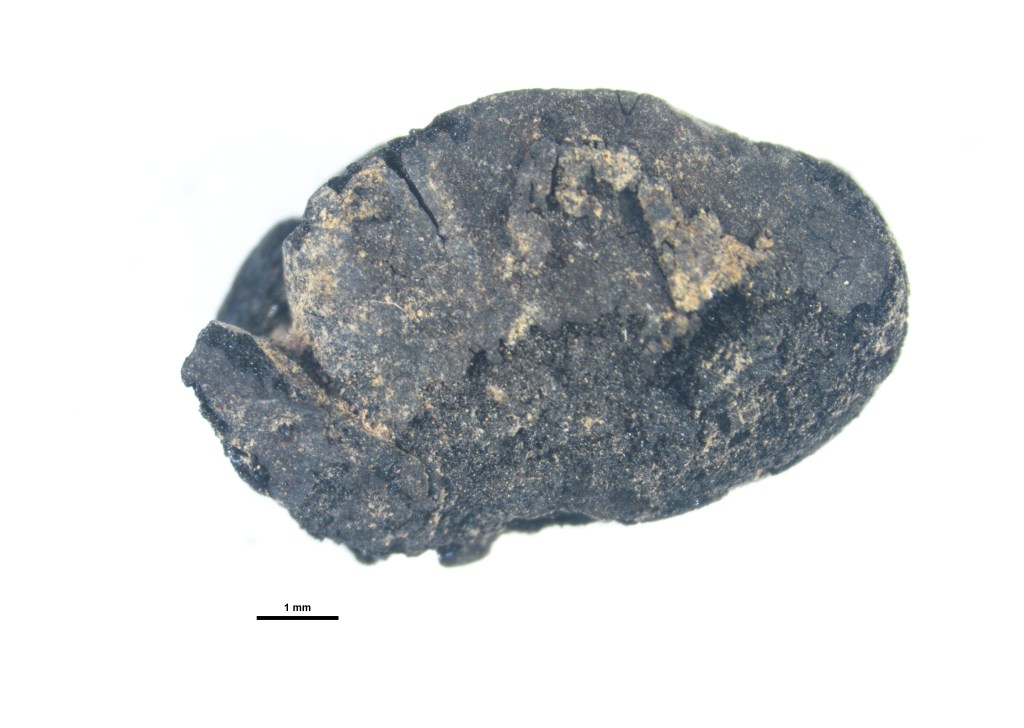
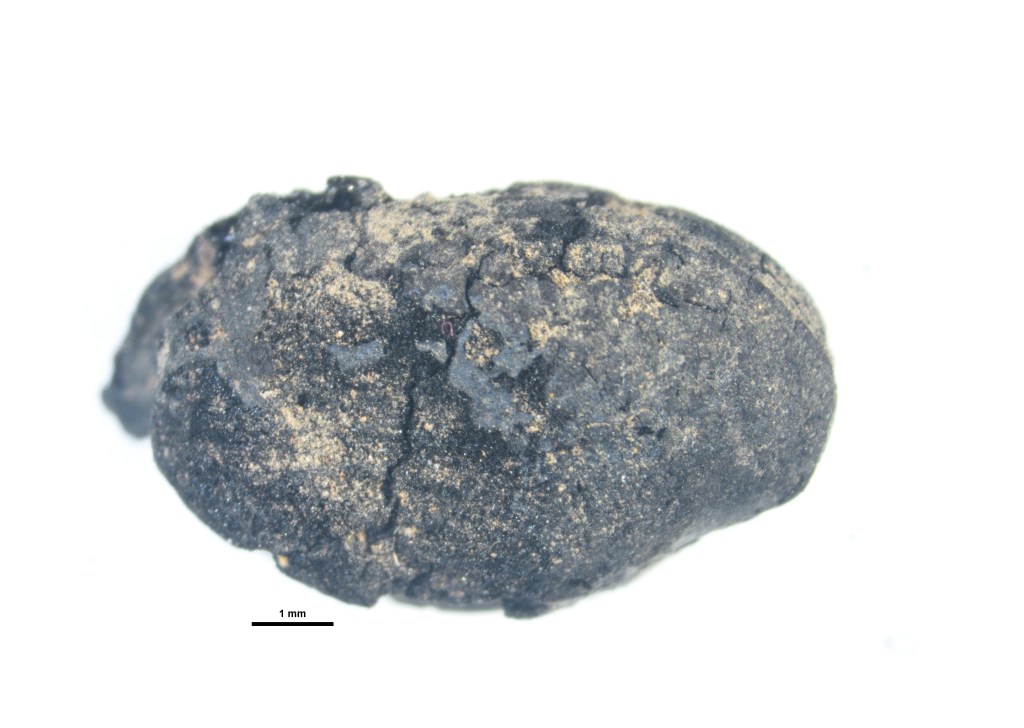

Archaeologically recovered from Ambohidahy
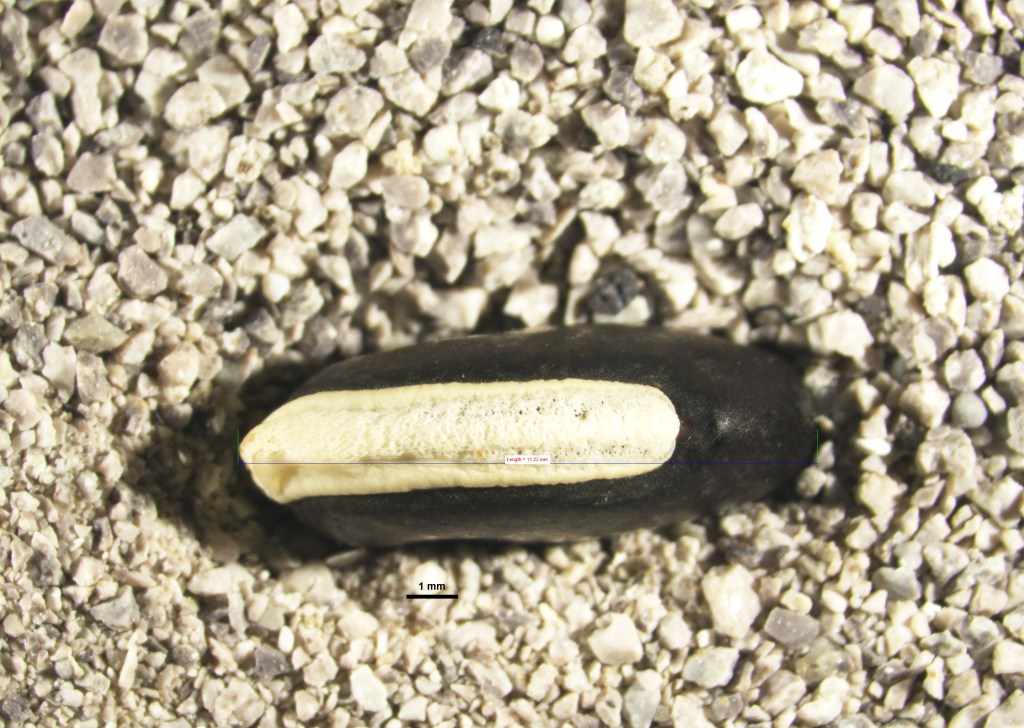

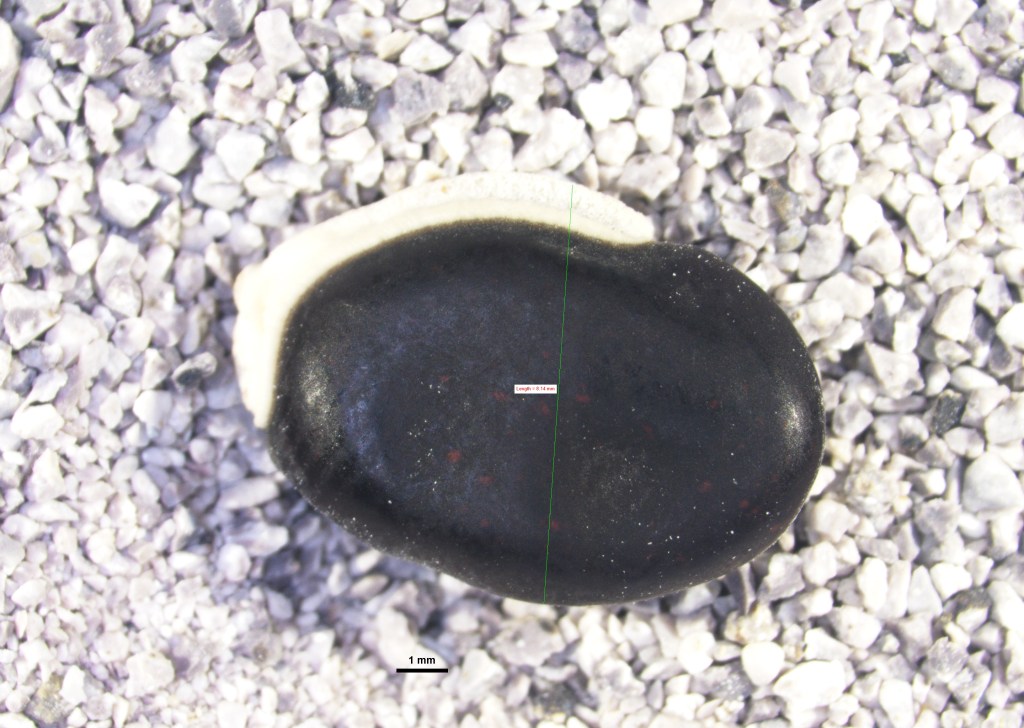
Modern reference sample

Comparison table for our specimen with measurements for a range of carbonized legumes excavated in India, from Fuller and Harvey 2006
Voavahy in Madagascar
The genus Lablab is comprised of a singe species known as Lablab purpureus. It is widely cultivated in Africa, Madagascar and throughout the tropics. In Madagascar there is a subspecies L. purpureus uncinatus that has slightly smaller flowers and produces fewer beans per plant. L. purpureus is mainly found in Western and Central Madagascar and is common in Imerina. The traditional habitat for Lablab is in deciduous and dry forests, forest margins, scrubland and along river banks up to 1800m. Lablab flowers from January to March and again from June till September (Du Puy et al 2002: 360-361).
In Malagasy Lablab is called Voavahy and is mentioned in Malagasy oral histories collected in the latter half of the 19th century by Father François Callet. The Histories of the Sovereigns (Tantaran’ny Andriana) record that the Vazimba (said to be the autochthonous inhabitants of the island) did not know rice and ate voavahy (Callet 1908:14).
Vigna cf. unguiculata

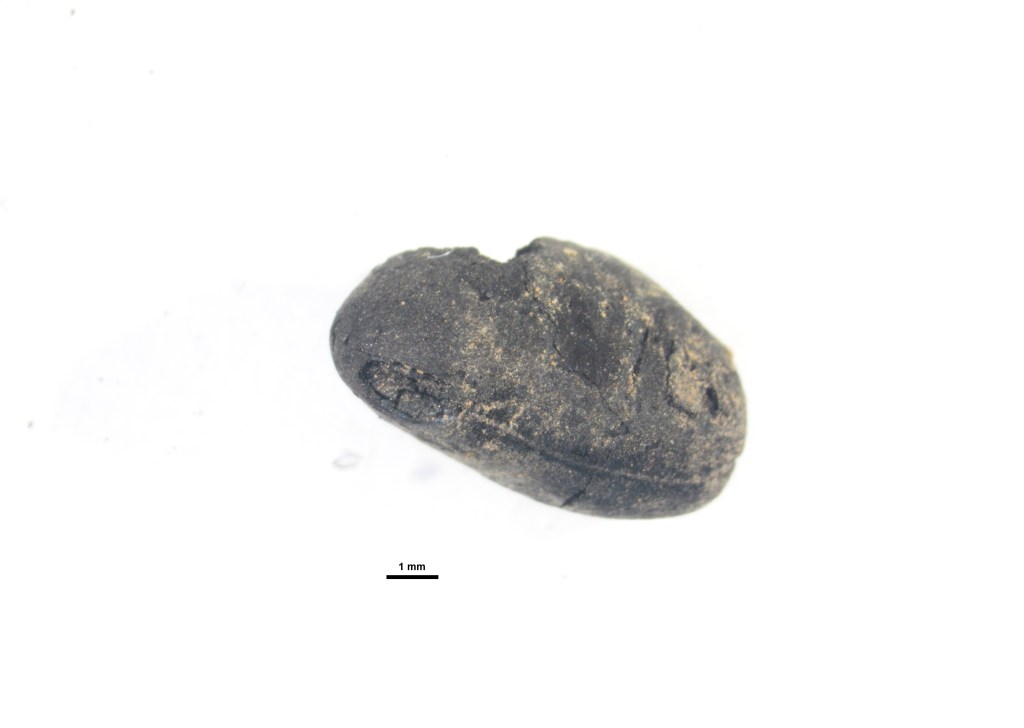
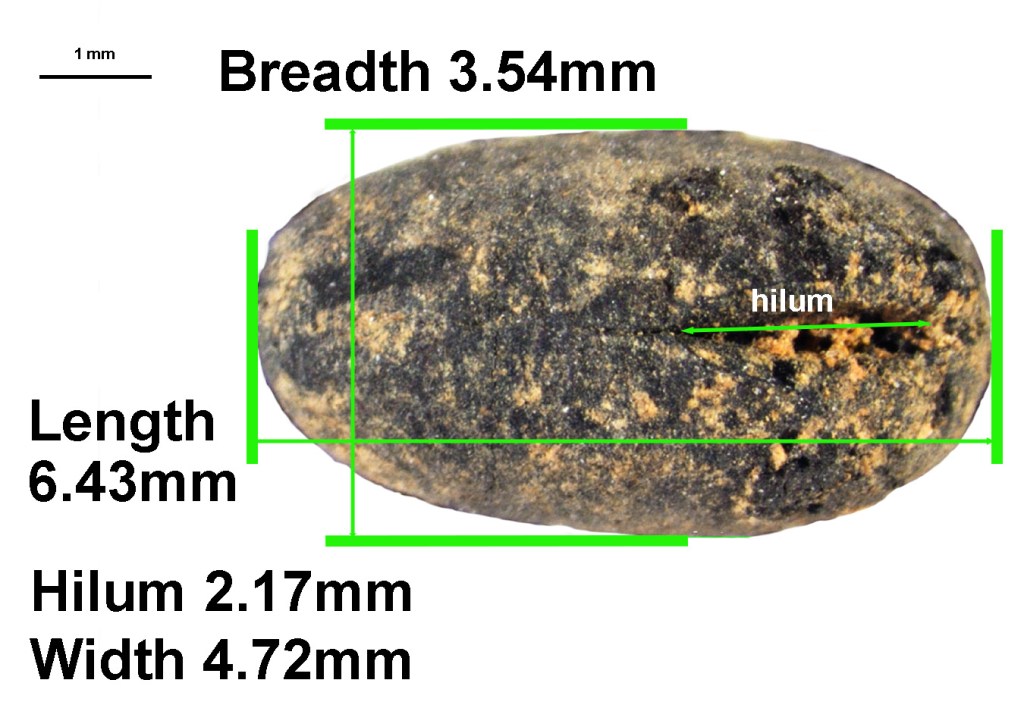
Archaeologically recovered from Ambohidahy
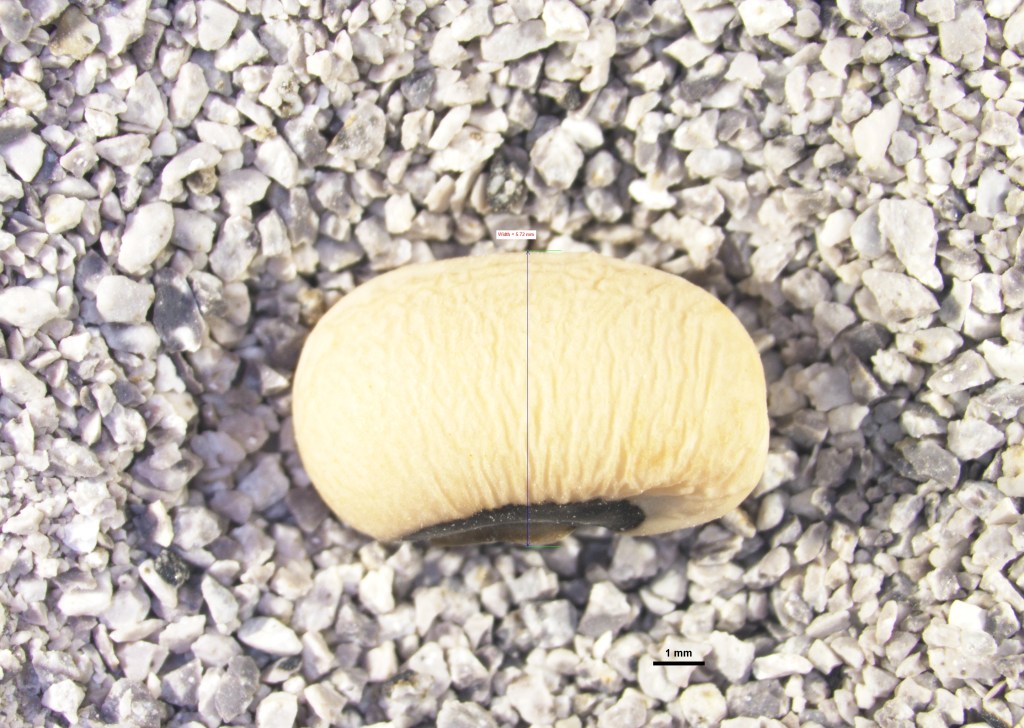

Modern reference sample
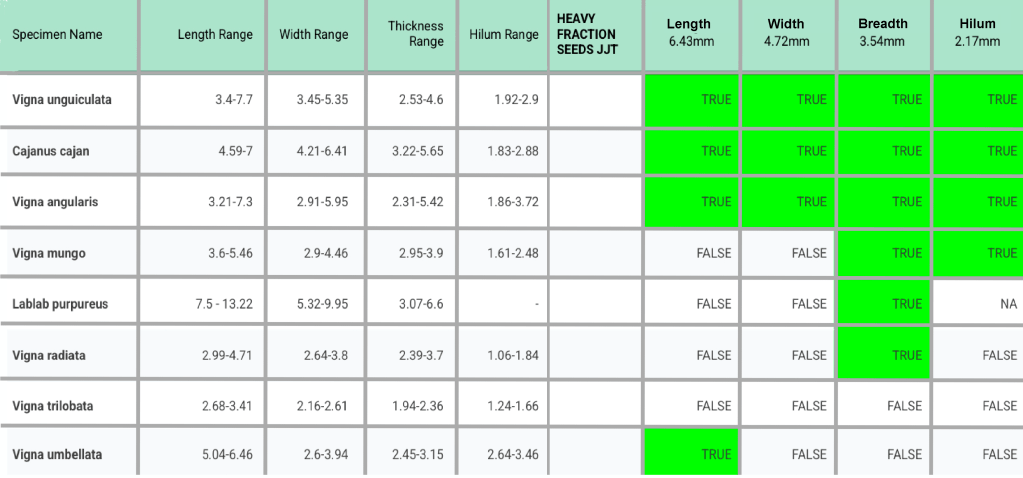
Comparison table for our specimen with measurements for a range of carbonized legumes excavated in India, from Fuller and Harvey 2006
Voanemba in Madagascar
Likely originating in the tropical regions of Africa, in highland Madagascar it is called voanemba. The first part of the name, voa means fruit or seed in Malagasy, and Philippe Beaujard observes that the second part nemba resembles the Shona word for cow pea, nyemba.
V. unguiculata has been recovered from other highland sites including Fanongoavana (late 15-16th century), excavated by David Rasamuel (2007) and Lohavohitra (16-18th century), excavated by Rafolo Andrianaivoarivony (1989).
References:
Beaujard, P. 2017. Histoire et Voyages des Plantes Cultivées à Madagascar: Avant le XVIe siècle. Paris: Karthala.
Callet, F. 1908. Tantaran’ny Andriana eto Madagascar. Antananarivo: Académie Malgache.
Chauvicourt, J., & Chauvicourt, S. 1967. La Monnaie Coupée et Les Poids Monétaires de Madagascar. Numismatique Malgache, Fascicule IV. Antananarivo.
Du Puy et al., 2002. The Leguminosae of Madagascar. Kew: Royal Botanic Gardens.
Fuller, D. Q., & Harvey, E. L. (2006). The archaeobotany of Indian pulses: identification, processing and evidence for cultivation.Environmental Archaeology,11(2), 219–246
Mayeur, N. 1913 [1777] Voyage Dans Le Sud et Dans l’intérieur Des Terres et Particulièrement Au Pays d’Hancove. Bulletin de l’Academie Malgache 12: 139–17
Rafolo, Andrianaivoarivony
1989 Les Fouilles de Lohavohitra. Contribution à l’étude Des Aménagements d’un Site Ancien Fortifié et Perché Du Vonizongo (Centre-Ouest). Omaly Sy Anio 29–32: 57–70.
Rasamuel, David
2007 Fanongoavana, Une Capitale Princière Malgache Du XIVe Siècle. Paris: Quae, Versailles.
 The Sacred Rice Archaeological Project